
Search Kenosha Booking Reports
Kenosha booking reports usually start with city police or the county jail side of the record trail, then move into Joint Services, the sheriff page, and the court system. The city gives you more than one place to begin, which helps when a recent arrest has not settled into a single public record yet. The safest search plan is to match the full name, the booking date, and the office that handled the intake. From there, Wisconsin CCAP, VINE, and the county records pages can show how the booking changed.
The city police desk, the county sheriff office, and Joint Services each answer a different part of the same booking report trail.
Kenosha Overview
Kenosha Booking Reports Search Tools
The first city source to check is the Kenosha Police Department. The department gives you a direct city contact for incident follow-up, while Kenosha Joint Services handles records work that may include arrest paperwork, request forms, and copies. When you are trying to track Kenosha booking reports, that split matters because the police side and the records side can move at different speeds.
The county jail side sits close to the city record trail. The Kenosha County Sheriff page gives you the larger custody picture, and the county research notes a public inmate lookup path on the county site. That is useful when a booking is fresh and you want to know whether the person is still in custody or already moved to a court hearing. If you need a quick court check, Wisconsin CCAP shows the docket side of the matter.
Kenosha booking reports also work better when you keep the intake office in mind. A city arrest may start with the police department, then move to Joint Services, and later show up in the county jail record. That is why a search with a clear name and a narrow date range usually finds the right result faster than a broad search that tries to cover the whole month at once.
Kenosha Jail and Records
Kenosha County Jail is at 1000 55th Street in Kenosha, and the research says visitation is handled through the GTL visiting application. That is a clue that the jail record and the visit rules live inside a broader custody system, not as a one-page lookup. When the record is current, the jail and the records office can both help confirm whether the booking is active, pending transfer, or already tied to a court date.
The image below comes from Wisconsin Circuit Court Access, which is the main state tool for connecting a city booking to the court file.
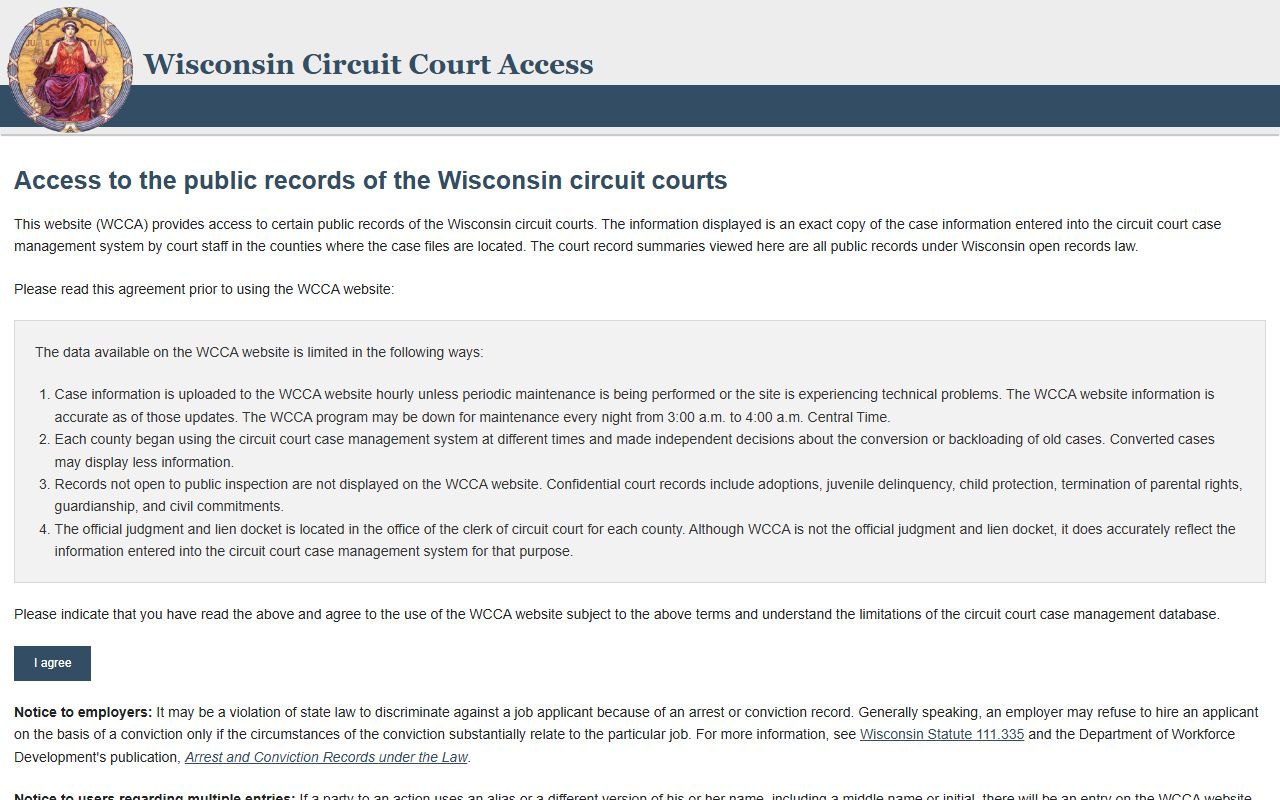
That state image fits Kenosha because the city search often ends up in court access after the police or jail side is identified. WCCA can show party names, case status, and docket entries, which is useful when the booking report and the court record do not line up on the same day. If the name is common, match it against the city office first, then use the court record to confirm the rest.
Kenosha Booking Reports Access
Kenosha booking reports can be requested through the Joint Services records process. The research says requests can be made in person, by phone, or by mail, and some records require a valid picture ID. Processing can take 7 to 10 business days, so it helps to ask for exactly what you need. If you need printed copies, the listed fee is $0.03 per page, and prepayment is required when the request is over $5.
That access model is straightforward, but it still rewards precision. Put the full name, the approximate booking date, and the office name in the request. If the record is not ready yet, use Wis. Stat. § 19.31 and Wis. Stat. § 19.35 as the public records frame, and use the Wisconsin DOJ Office of Open Government or the Wisconsin State Law Library if you need help reading the access rules.
Note: The city and county pieces can separate fast, so a narrow request is usually better than asking for every record tied to the same person.
Kenosha Court Records
Kenosha court records show what happened after the booking. Wisconsin CCAP is the easiest way to check the docket side of the case, and it can show party names, hearing dates, and status changes that are not visible in a jail-only record. That matters because a city arrest may turn into a county case, a bond review, or a later dismissal long after the first booking search is done.
The county research also points to Wisconsin DOC for later custody checks after the first city booking search. That does not replace the booking report, but it helps explain what happens after the arrest record is filed and later routed through custody or supervision systems. If a record later becomes sealed or otherwise limited, the public view may change under Wis. Stat. § 973.015.
For Kenosha booking reports, the cleanest routine is simple. Start with the city police or Joint Services record, move to the county jail and sheriff pages for custody, then confirm the court side in CCAP. That keeps the search grounded in official sources and avoids mixing up a city intake with a county booking that happened a day or two later.